
Hitory of Multan
Multan is a city in south central Punjab province. It is built just east of the Chenab River. About 966 km from Karachi and more or less right in the center of the country lie the ancient city of Multan. Multan, the 'City of Pirs and Shrines' is a prosperous city of bazaars, mosques, shrines and superbly designed tombs.
Multan is understood because the town of Sufis or town of Saints and Madinat-ul-Auliya attributable to the massive range of shrines and Sufi saints from town. Town is blanketed with bazaars, mosques, shrines, and ornate tombs. The old city has narrow colorful bazaars full of local handicrafts and narrow winding lanes. There are many places of historical, cultural and recreational interest in the city. it's the birthplace of Fariduddin Ganjshakar (popularly referred to as "Baba Farid"), recognized because the initial major writer of the Punjabi language.
Multan is a commercial and industrial center, it is connected by road a rail with Lahore and Karachi and by air with Karachi, Quetta, and Faisalabad. Industries include fertilizer, soap, and glass factories; foundries; cotton, woolen and silk textile mills; flour, sugar and oil mills; and a large thermal-power station. It is famous for its handicrafts (ceramics and camel-skin work) and cottage industries. There are hospitals, public gardens, and several colleges affiliated with the University of the Punjab. The University of Multan was established in 1975. Large, irregular suburbs have grown outside the old walled town, and two satellite towns have been set up. The numerous shrines within the old city offer impressive examples of workmanship and architecture.
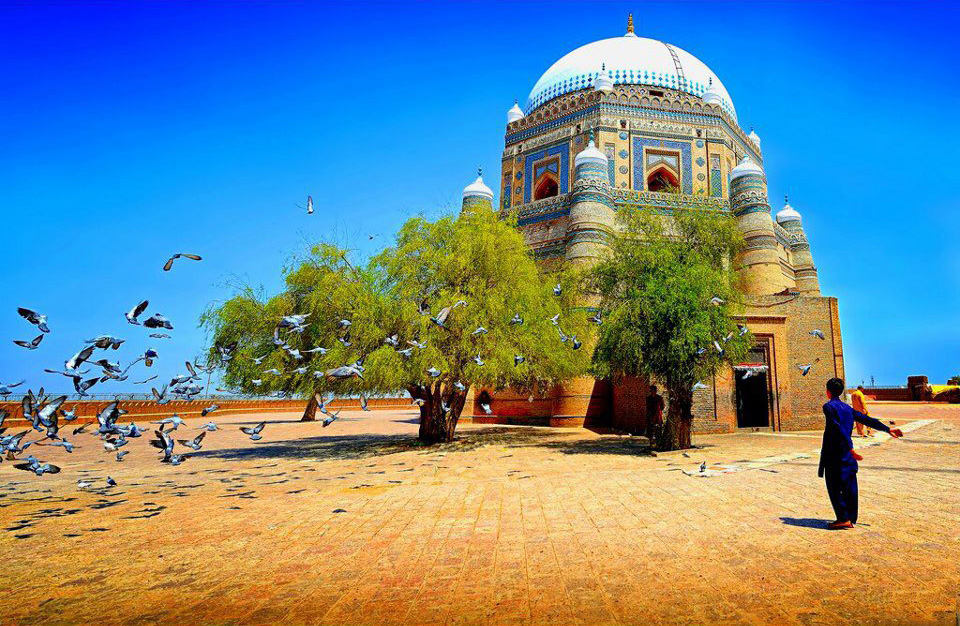
Shah Rukn-e Alam (Tughlaq period) has one of the biggest domes in Asia. The shrine of Sheikh Yusuf Gardez is masterpiece of the Multani style. Located within Fort Kohna within the center of Multan town is land mark and identity of Multan. It belongs to Arab chief Rukn ud Din Abul Fateh, usually called Shah Rukne Alam was grandchild of Sufi Saint Bahaudin whose shrine is close within the for Kohna Multan. This massive doom was created by Ghaus ud Din Tughlak king for himself however was given to the saint by his son. Saint was antecedently buried along with his granddad. Topographic point shows the wonder of pre Mughal design in landmass.
- Area: The total area of the district is 3,721 km2.
- Total population: 3,116,851
- Total Population 3,116,851
- Annual growth rate 2.45%
- Population density 850 persons per sq. km
- Area-wise population
- Gender-wise population
Demography
Area |
Population |
Percentage |
Rural |
165809 |
6% |
Urban |
2597675 |
94% |
Source: DCR 1998 (Projected population)
Gender |
Population |
Percentage |
Male |
1354107 |
49 |
Female |
1409377 |
51 |